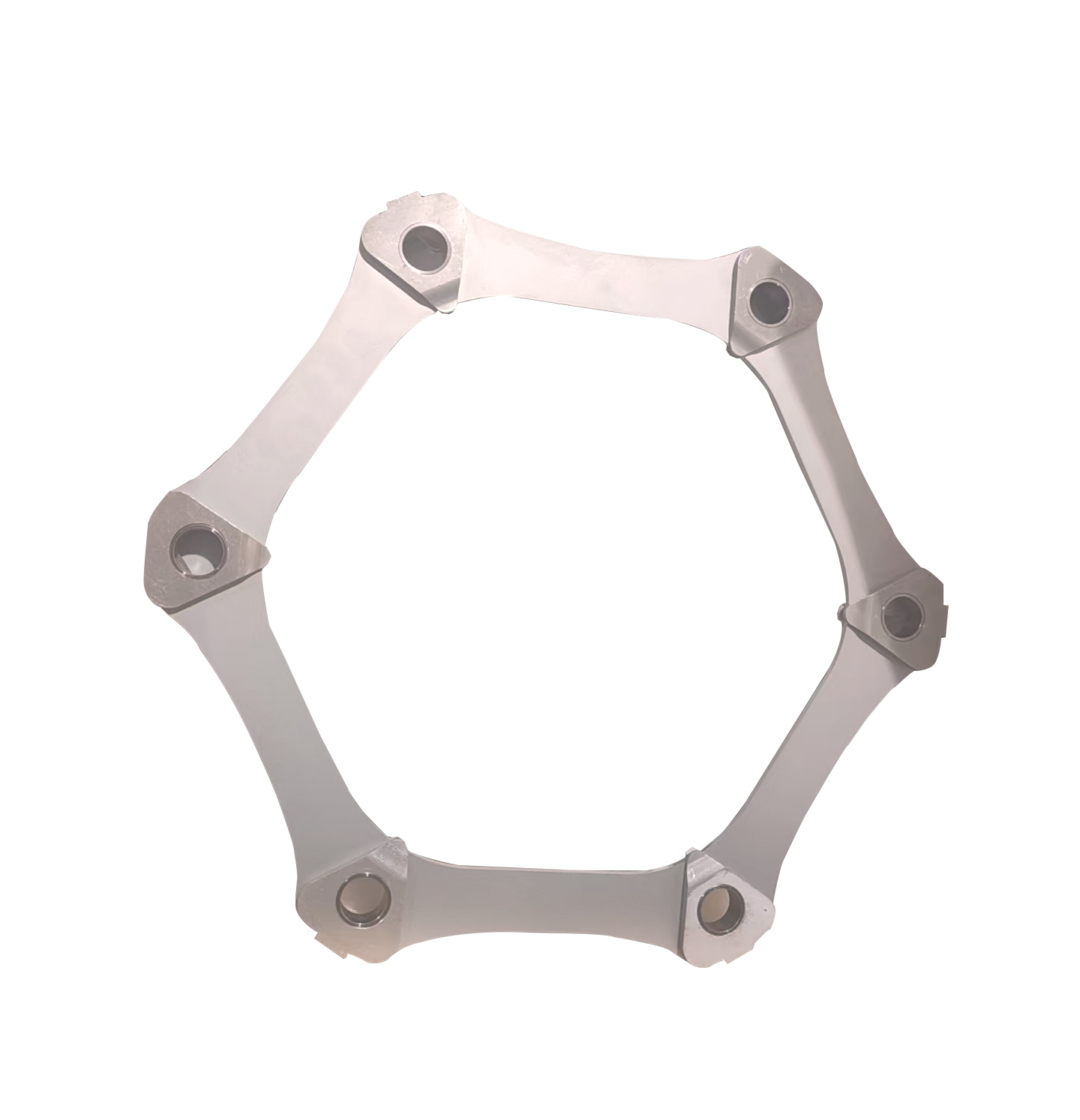
2MW for Vestas unit Metal diaphragm replacement
Coupling diaphragms are devices used to connect two rotating shafts, compensating for relative displacement between the shafts through the elastic deformation of the diaphragms.
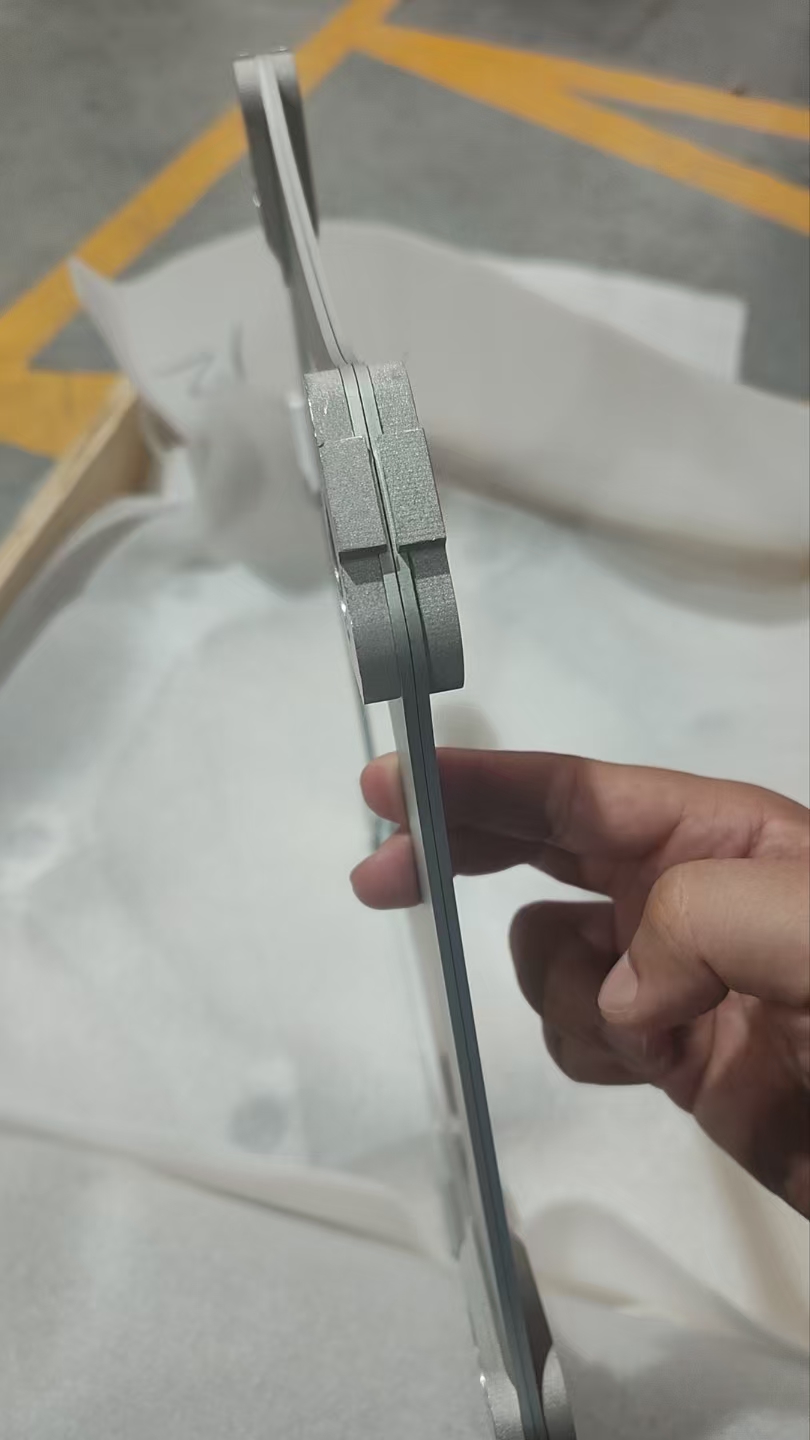
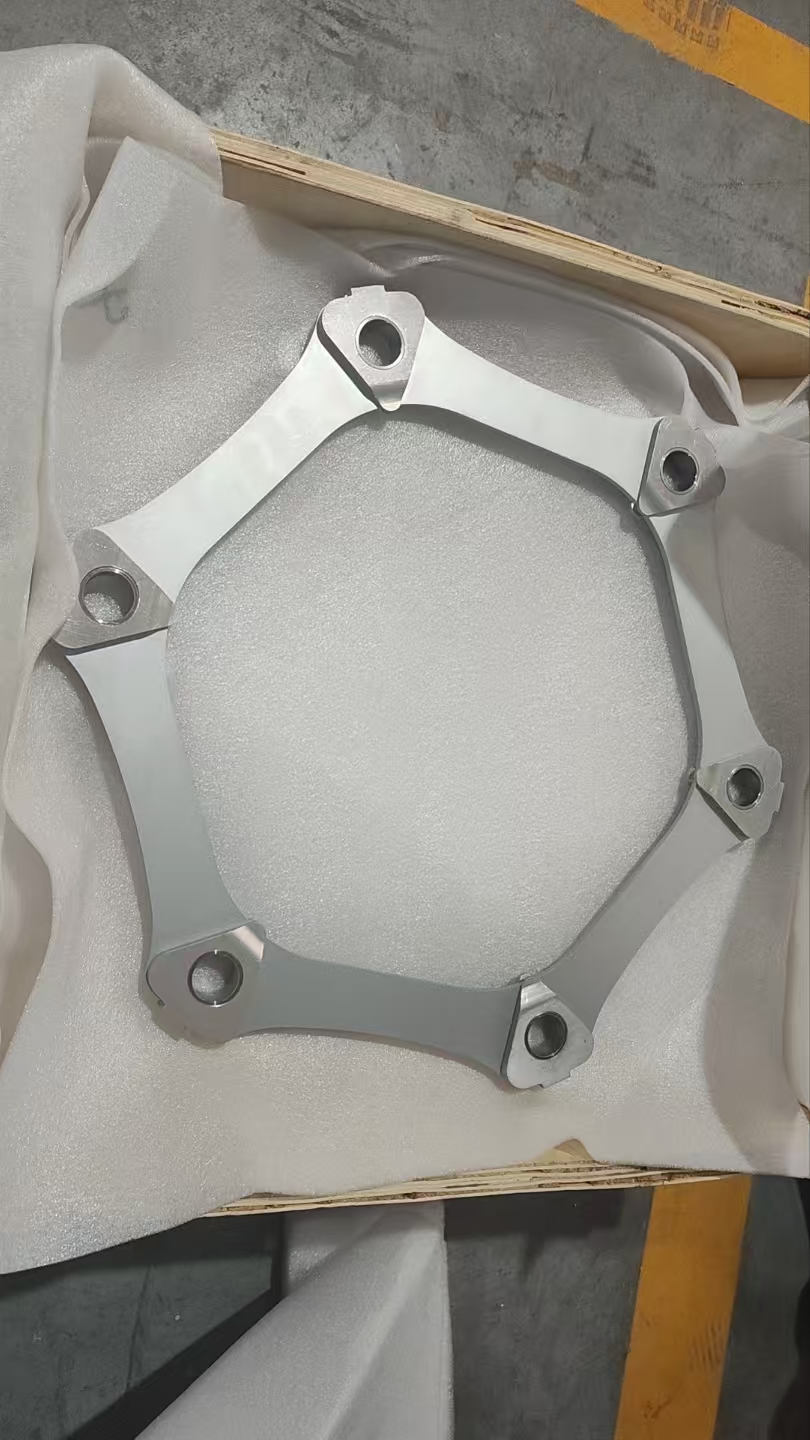
A diaphragm coupling consists of several groups of diaphragms made of thin stainless steel sheets, which are alternately connected to the two half-couplings. Each group of diaphragms is assembled by stacking multiple sheets together.
Diaphragm couplings are characterized by high-performance metallic elastic elements, enabling operation in high-temperature, high-speed and corrosive environments. They require no lubrication, feature a compact structure, high strength and long service life, with no rotational backlash. Furthermore, they possess excellent acid resistance, alkali resistance and corrosion resistance.
Application Scope
It is widely used in shaft transmission of various mechanical devices, such as water pumps (especially high-power and chemical pumps), fans, compressors, hydraulic machinery, petroleum machinery, printing machinery, textile machinery, chemical machinery, mining machinery, metallurgical machinery, aviation (helicopters), high-speed power transmission systems for naval vessels, steam turbines, piston power machinery transmission systems, tracked vehicles, as well as high-speed and high-power mechanical transmission systems for generator sets. It has been commonly applied in high-speed transmission shaft systems after dynamic balancing.
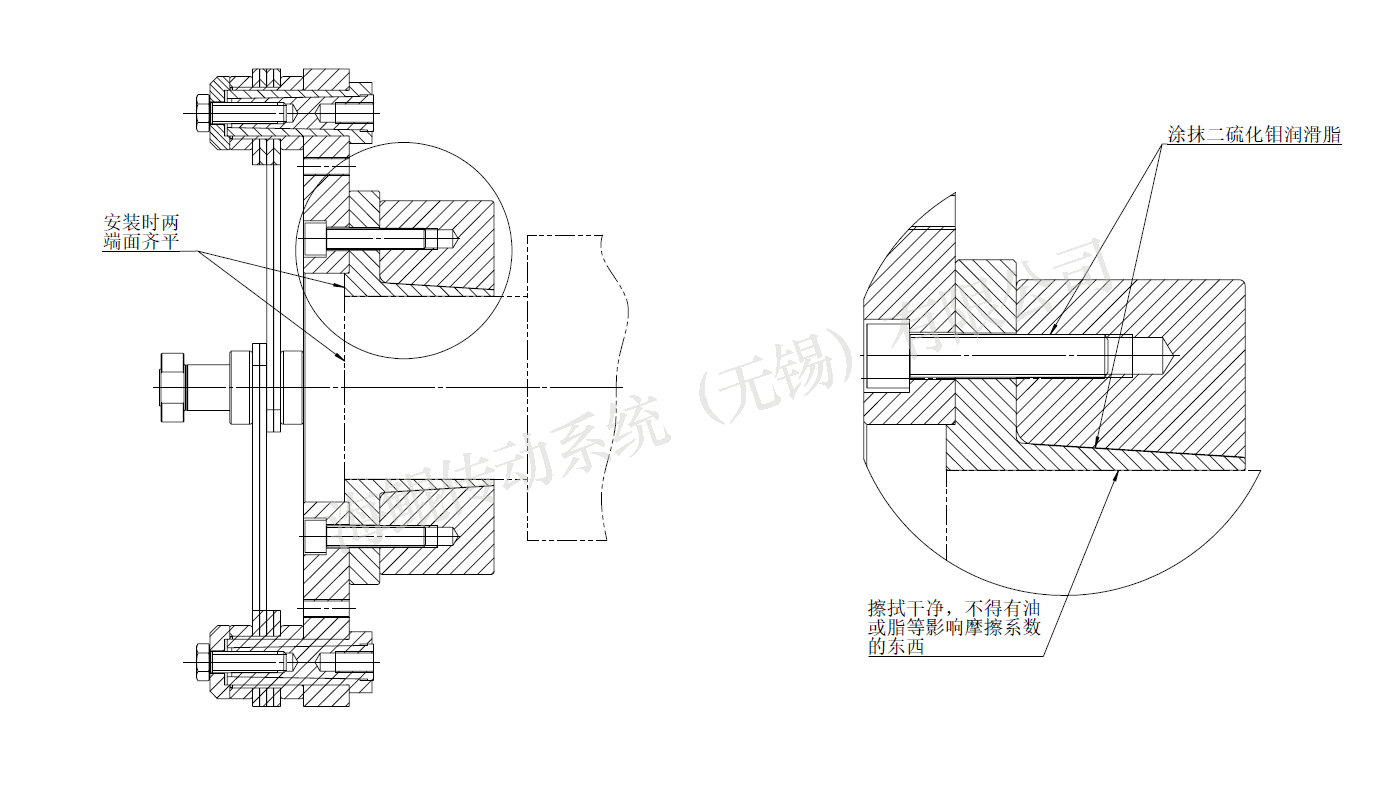
Installation and Maintenance Precautions for Diaphragm Couplings
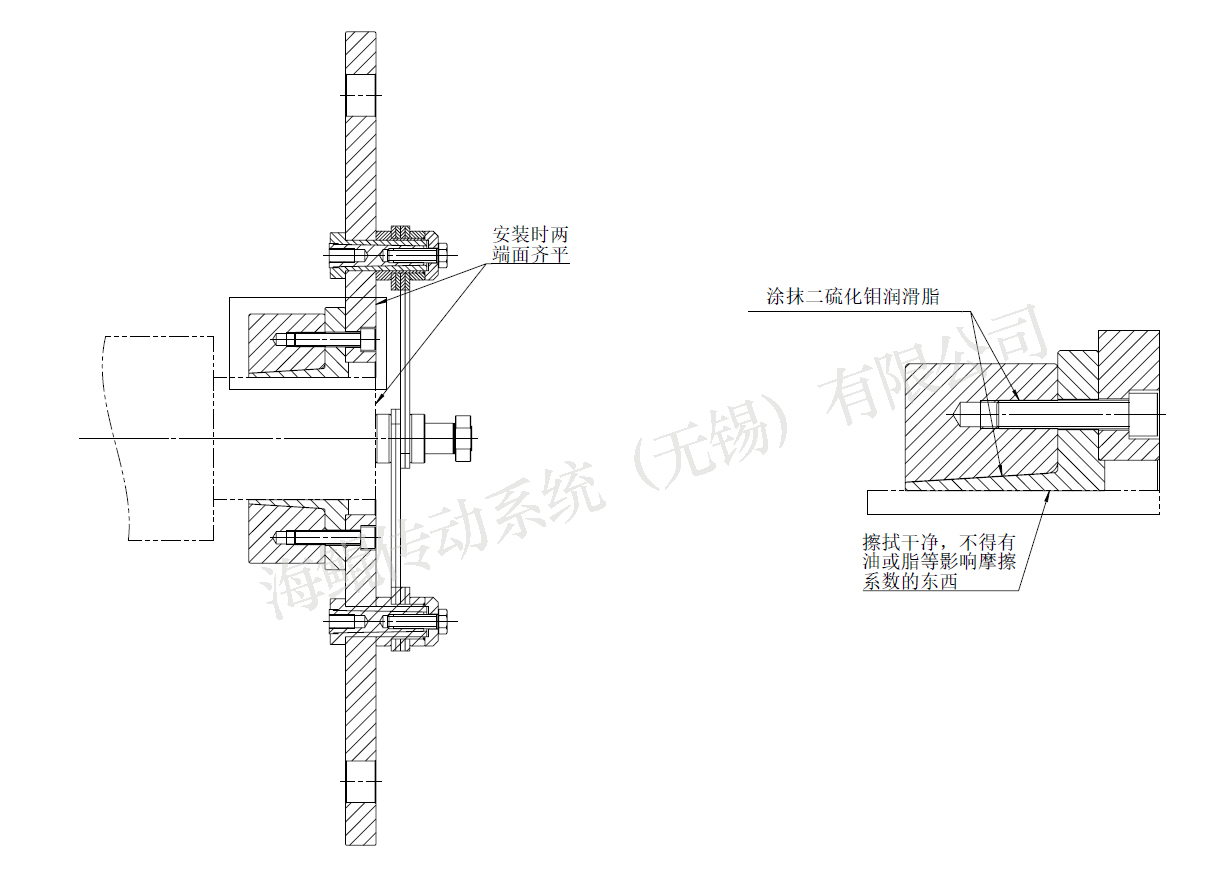
Before installation, check the concentricity and end face runout of the two connecting shafts to ensure they meet the assembly requirements.
Do not knock or impact the diaphragm group violently during installation, so as to avoid deformation or damage to the metal diaphragm.
Ensure the fastening bolts are tightened evenly and torqued to the specified value; avoid uneven force or loose bolts.
During operation, avoid overload, sudden impact load and excessive radial, axial and angular misalignment exceeding the allowable range.
Since the diaphragm coupling needs no lubrication, do not add any grease or lubricant to the diaphragm group.
Regularly inspect the diaphragm group for cracks, deformation, fatigue damage and bolt looseness. Replace damaged parts in time.
Keep the working environment clean to prevent dust, abrasive particles and corrosive media from attaching to the diaphragm.
When disassembling, operate gently and mark the assembly position to ensure correct reassembly and dynamic balance performance.