
The multi-channel rotary joint is a precision sealing device used for transmitting various media between rotating equipment and stationary pipelines. Its core principle is to achieve leak-free transmission under 360° rotation through a multi-channel independent sealing structure.
What is a multi-channel rotary joint?
1. There are many channels connected
2. Multi-channel connections involve multiple media, such as water, gas, oil, etc
3. It is composed of two connectors, an inner and an outer, and a rotating part. The linkage rotation of the two connectors, driven by the rotating part, enables the mutual transmission of various media.
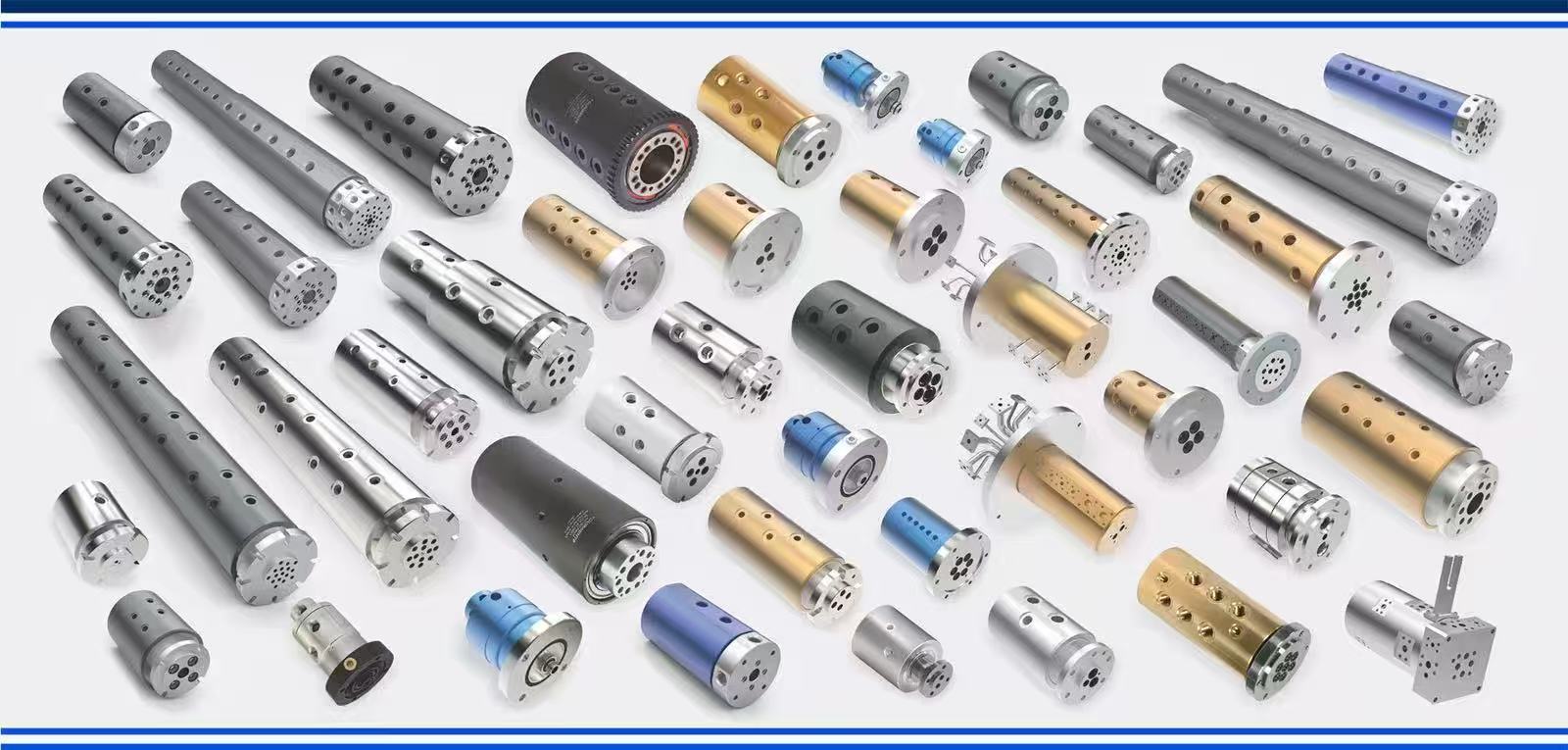
Working principle
The multi-channel rotary joint achieves medium transmission through the combination of dynamic and static seals. It typically employs a friction pair consisting of a spherical ring (dynamic seal) and a housing plane (static seal), with a spring providing continuous compensating pressure. After entering from the inlet, the medium is diverted through internal channels to each channel and finally discharged from the other end.
Structural characteristics
Channel independence: Each channel adopts an independent sealing design, ensuring that the media do not interfere with each other, and supports simultaneous transmission of gas, liquid, or steam.
Sealing technology: Common sealing forms include Type Q (spherical ring compensation), Type H (bellows seal), and Type D (direct bellows seal), which adapt to different working conditions.
Bearing support: Built-in rolling bearings reduce friction and ensure stability during high-speed rotation.